
Bedroom Accessories Ideas That Make a Real Difference
Canalside Interiors on 17th Sep 2026
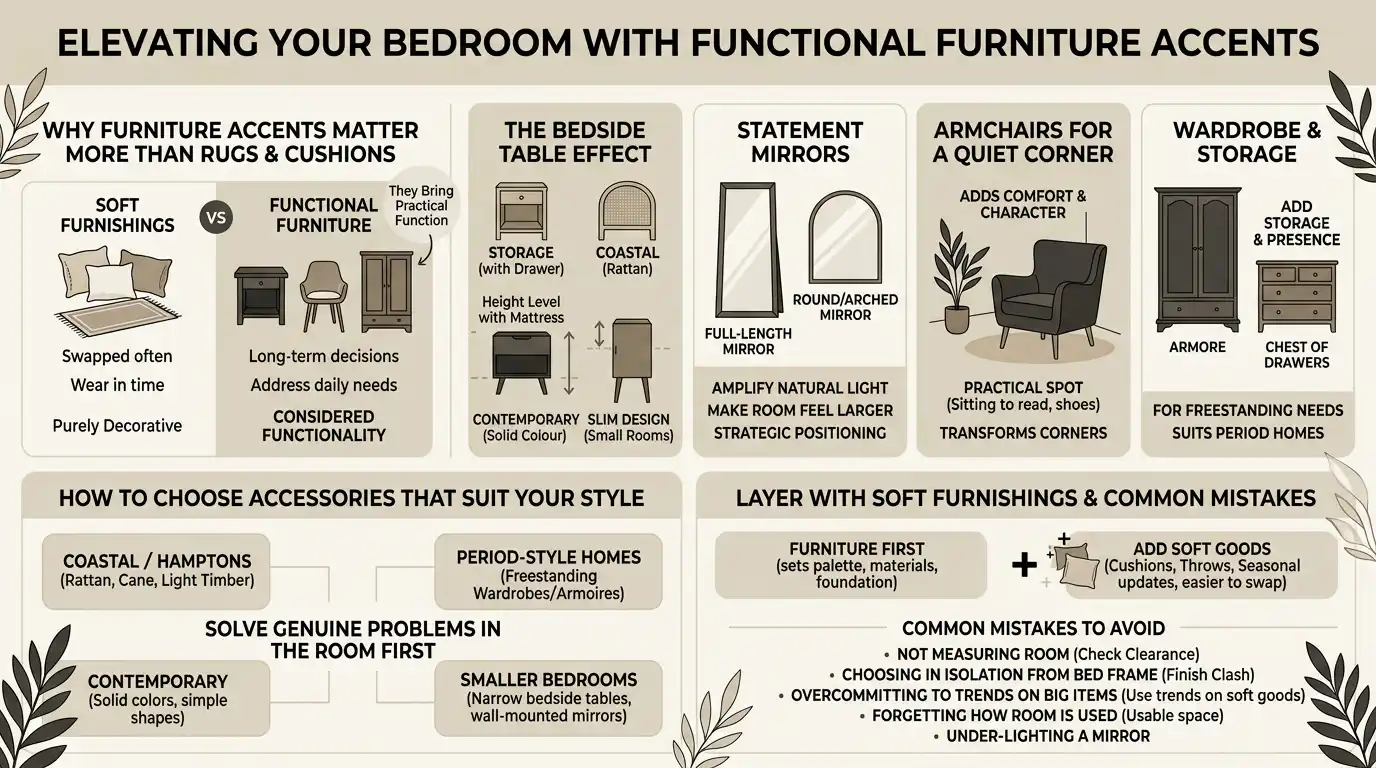
The pieces that make the biggest difference to a bedroom are the ones you actually use every day; a bedside table with storage, a mirror that opens up the room, an armchair for a quiet corner and a wardrobe or armoire for the things you do not want on display all do more long-term work than a decorative throw or a scented candle.
This guide explores the furniture pieces that elevate a bedroom beyond aesthetics, combining practical function with thoughtful design.
Why Furniture Accents Do More Than Rugs and Cushions
Soft furnishings have their place; a good rug warms up a cold floor, and a few well-chosen cushions can lift an otherwise plain bed, instantly. But they are also the accessories most likely to be swapped out or replaced within a year or two as trends shift or wear sets in.
Furniture works differently; your choice in bedside table, mirror or armchair is a decision you make once and then live with for years, which means it is worth spending a bit more thought on. These pieces also serve a practical purpose, addressing the everyday needs of a bedroom; from providing a place for a lamp and your latest read, to offering a spot to check your outfit or sit while putting on your shoes. Rather than simply filling an empty corner or decorating a surface, they bring considered functionality to the space.
This of course doesn't mean that you should skip the rug or the cushions but rather that when working through a list of bedroom accessory ideas, your choice in furniture deserves to be considered important, rather than treated as an afterthought once the soft furnishings are in place.
The Bedside Table Effect
A bedside table is one of the most frequently used pieces of furniture in the bedroom, yet it is often overlooked when it comes to updating the space. If yours are mismatched, unsteady or simply no longer provide enough room for the essentials, replacing them can be one of the most impactful changes you make. A well-chosen bedside table can improve both the functionality and overall feel of the room, while giving you a practical surface for the things you reach for every day.
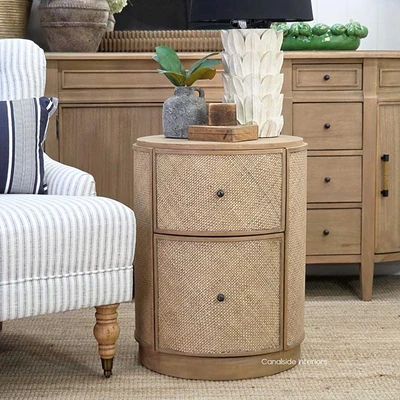
Look for a design with at least one drawer if you want somewhere to tuck away chargers or anything else you do not want on permanent display. A rattan or cane bedside table suits a coastal or relaxed interior style and pairs well with natural timber bed frames, while a more streamlined design in a solid colour works better in a contemporary bedroom. If your bedroom is on the smaller side, a narrow, slim-profile bedside table keeps the space feeling open without sacrificing the surface you need for a lamp and a glass of water.
Matching pairs either side of the bed give a room a more considered, finished look, though mismatched bedsides can work too if the room already has enough symmetry elsewhere, such as identical lamps or artwork.
Height matters most. A bedside table should sit roughly level with the top of your mattress, give or take a few centimetres. Too low and it disappears visually next to a tall bed frame. Too high and reaching for a glass of water at night becomes awkward.
A Statement Mirror to Open Up the Room
A mirror is obviously useful for getting ready, but it also has a real effect on how large and bright a room feels.
A full-length mirror against the wall works well in a larger bedroom. In a smaller room, a round or arched mirror above a dresser or bedside table achieves a similar effect without taking up floor space.
Positioning also matters more than most people realise. A mirror placed to reflect a window will amplify natural light through the room during the day, while one placed opposite a doorway can make a hallway or entry feel larger the moment you walk in.
An Armchair for a Quiet Corner
Not every bedroom has the space for an armchair, but if yours does, it can be a simple yet effective way to add both comfort and character to an empty corner. It creates a practical spot to sit while putting on shoes, as well as somewhere to retreat with a book and unwind for a few minutes before bed.
Placement is just as important as the chair itself. Tucking it into an underused corner, rather than giving it a prominent position, helps the room feel balanced and ensures the chair complements rather than competes with the bed. If your bedroom has a window with a view worth lingering over, positioning the chair towards it can make the most of the space and transform an otherwise overlooked corner into one of the most inviting spots in the room.
Wardrobe and Storage
An overflowing wardrobe with doors that do not close properly undercuts even the most carefully styled bedroom.
If built-in wardrobe space is limited, a freestanding armoire adds both storage and presence to a room, particularly in a period-style home where fitted wardrobes were never part of the original design.
A chest of drawers can achieve something similar on a smaller scale, and work well as an alternative or companion to a full armoire if floor space is limited.
|
Browse the range: Explore Canalside's bedside tables, mirrors, armchairs and wardrobes and armoires to find the pieces that will actually get used in your bedroom. |
How to Choose Accessories That Suit Your Bedroom Style
The right bedroom accessories depend on the style you are hoping to achieve, and the pieces you want to stand out versus the pieces you want to blend in.
- Coastal or Hamptons-style bedrooms: rattan, cane and light timber tones work well, keeping the room feeling relaxed rather than heavy.
- Contemporary bedrooms: bedside tables in solid colours, a simple round or arched mirror, and an armchair in a plain fabric keep the look clean.
- Smaller bedrooms: choose narrow bedside tables and wall-mounted mirrors over bulkier, floor-standing pieces, and if floor space is particularly limited, consider skipping the armchair altogether.
- Period-style homes: a freestanding armoire or wardrobe often suits the room more appropriately than built-in storage for homes of this style.
Whatever the style, the underlying approach is the same; choose the furniture that solves a genuine problem in the room first, then layer in the softer, more easily changed pieces like cushions and throws around them.
Layering Furniture Accents With Soft Furnishings
Once the core furniture pieces are in place, the softer accessories still matter, they just work best as the layer that gets added afterwards rather than the starting point. A bedside table gives you somewhere to put a small lamp and a stack of books. A mirror gives you a spot nearby to hang a small piece of art or a woven wall hanging. An armchair becomes the natural place for a folded throw or a single statement cushion, rather than needing an entire cushion arrangement to justify its presence.
This order matters more than it might seem. Buying cushions and throws before you have settled on your furniture pieces often means the colour palette gets decided by whatever soft furnishings happened to catch your eye, rather than by the room as a whole. Settling on the furniture first, in tones and materials that suit the space, gives you a more stable foundation to build the softer layer around, and makes it far easier to swap out a cushion or throw later without the whole room needing to change with it.
It also means you get more mileage out of seasonal refreshes. Swapping a linen throw for a heavier knit one in winter, or changing a single cushion cover, is a small, inexpensive update precisely because the furniture underneath is not part of what needs changing each time.
Common Mistakes When Choosing Bedroom Accessories
A few patterns come up again and again when bedroom accessories do not quite land, even when each individual piece was a reasonable choice on its own.
- Buying furniture before measuring the room. A bedside table or armchair that looked reasonably sized online can crowd a small bedroom once it is actually in place. Measure the available floor space and leave at least enough clearance to walk comfortably around the bed before committing to a piece.
- Choosing accessories in isolation from the bed frame. A bedside table or mirror that clashes with the timber tone or finish of the bed frame will always look slightly disconnected, no matter how nice each piece is individually. Bring a photo of your existing furniture, or at least note the finish, before choosing new pieces.
- Overcommitting to a trend on a big-ticket item. A trend-led colour or finish is a safer bet on a cushion or throw, something you can replace cheaply in a year or two, than on a wardrobe or bedside table you intend to keep for a decade. Save the bolder, trend-driven choices for the soft furnishings layer.
- Forgetting how the room is actually used. A stunning armchair that no one ever sits in because it is wedged in an awkward corner is a decorative accessory, not a functional one. If a piece will not genuinely get used, it is worth reconsidering before you buy it.
- Under-lighting a mirror. A mirror positioned somewhere with poor natural or artificial light loses much of its practical value. Where possible, position mirrors near a window or a light source rather than in the darkest corner of the room.
Frequently Asked Questions About Bedroom Accessories
Q: What are the best bedroom accessories ideas besides rugs and cushions? |
| A: Furniture accents such as a bedside table with storage, a statement mirror, an armchair, or a freestanding wardrobe tend to have more lasting impact than soft furnishings, since they solve a genuine problem in the room and are less likely to need replacing. |
Q: Do bedside tables need to match? |
| A: Not necessarily. Matching bedside tables give a more symmetrical, finished look, but mismatched pairs can work well if the room already has balance elsewhere, such as matching lamps or artwork on either side of the bed. |
Q: How does a mirror make a bedroom feel bigger? |
| A: A mirror reflects natural light back into the room rather than letting it stop at the nearest wall, which makes the space feel brighter and more open. A full-length or arched mirror tends to have the strongest effect. |
Q: Is an armchair worth including in a bedroom? |
| A: If there is room for one, yes. A bedroom armchair tends to get used for practical moments like putting on shoes or reading before bed, more often than people expect before they have one. |
Q: What should I look for in a freestanding wardrobe or armoire? |
| A: Look for a piece with enough hanging and shelf space for your needs, and choose a timber tone or finish that matches your existing bed frame or bedside tables so it reads as part of the room's styling rather than a purely functional addition. |
Q: Should I buy bedroom furniture or soft furnishings first? |
| A: Furniture first is generally the better order. Bedside tables, mirrors, armchairs and wardrobes set the colour and material palette for the room, and soft furnishings like cushions and throws are easier and cheaper to choose once that foundation is in place. |
Q: How many accessories are too many for a small bedroom? |
| A: In a small bedroom, it is usually better to choose fewer, higher-impact pieces, such as one well-placed mirror and a slim bedside table, rather than adding an armchair or extra furniture that leaves little room to move. Leaving some open floor space tends to make a small room feel larger than filling every corner. |