
Hamptons Style Architecture Australia: The Harrison Residence
Canalside Interiors on 20th Apr 2026
When it comes to capturing the soul of Hamptons style architecture Australia has embraced so wholeheartedly, few projects have done it as beautifully — or as thoughtfully — as the Harrison Residence, designed by the acclaimed Jeffrey Dungan Architects. Perched beside a rare inland dune lake, this remarkable coastal retreat blends sophisticated design, time-honoured natural materials, and a deep respect for its surrounding environment into something truly extraordinary.
For Australian homeowners and design enthusiasts drawn to the enduring appeal of Hamptons-style living, the Harrison Residence offers a wealth of inspiration — demonstrating how classic coastal aesthetics can be elevated with contemporary detail, without losing warmth or character. In this article, we explore the thoughtful design decisions, material choices, and interior collaborations that make the Harrison Residence a standout example of what modern Hamptons architecture can achieve.
A One-of-a-Kind Setting That Shapes Every Design Decision
The location of the Harrison Residence is as remarkable as the home itself. Positioned on an inland dune lake — one of the rarest ecosystems on the planet — the property is enveloped by dense pine forests and native shrubbery, creating an atmosphere of seclusion and natural serenity. Inland dune lakes of this kind are found in only a handful of places worldwide, including parts of Australia, Madagascar, New Zealand, and the Oregon coast of the United States. Their ecological rarity adds a layer of meaning and responsibility to any architectural project undertaken nearby.
This extraordinary setting profoundly influenced the design brief given to Jeffrey Dungan Architects. The homeowners' vision was clear: build a home that feels like a natural extension of the landscape — a dwelling that belongs to its environment rather than imposing on it — without sacrificing luxury or considered design. The architectural response was equally considered. Rather than a conventional rectangular layout, the team opted for an L-shaped structure, a deliberate decision that maximises sightlines across the lake from multiple rooms while maintaining privacy throughout the home.
This thoughtful orientation ensures that each room captures a different facet of the natural surroundings — from the dense stillness of pine groves to the glittering movement of the water beyond. Careful positioning of windows, terraces, and outdoor living spaces further ensures that the home benefits from optimal natural light and cross-ventilation year-round — a hallmark of well-designed coastal architecture in the Australian tradition.
Materials and Architecture: The Hamptons Aesthetic Meets Modern Rigour
One of the most compelling aspects of the Harrison Residence is how Jeffrey Dungan Architects have managed to balance Hamptons tradition with practical modern construction. Cast-in-place concrete forms the structural backbone of the home — a choice driven not only by structural integrity but also by the region's exposure to severe weather, including hurricanes and coastal storms. This material brings a contemporary robustness to the residence without compromising the refined aesthetic expected of Hamptons style design. Against this structural framework, the home's crisp white stucco facade does the heavy lifting aesthetically.
White — the quintessential Hamptons exterior colour — acts as a clean canvas, drawing the eye to the lush greenery, still water, and natural landscape beyond. It reflects natural light beautifully, keeping the home feeling bright and airy through every season, while also delivering practical benefits such as reduced heat absorption during warmer months. Contrasting black accents, used across window frames and trims, bring a modern sharpness to the silhouette.
This detail — increasingly seen in contemporary Hamptons-style homes across Australia — adds visual depth and sophistication while keeping the overall palette restrained and timeless. Natural materials are woven throughout, reinforcing the connection between the built environment and the natural world. Light-toned timber is used across floors and ceiling linings, introducing warmth and organic texture in a way that feels relaxed rather than formal. The choice of materials was not purely aesthetic — the coastal climate demands durability. Treated timber, weather-resistant finishes, and reinforced concrete were all selected with longevity in mind, ensuring the home remains as beautiful in twenty years as it is today.
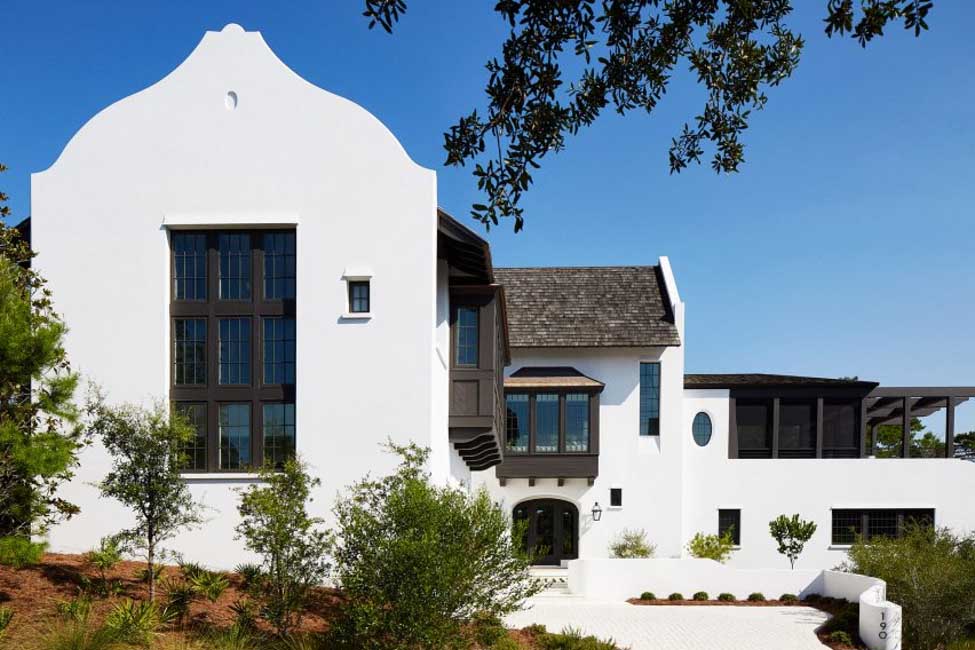 The Harrison Residence exterior — crisp white stucco facade with black window accents set against dense pine surrounds. Photography by William Abranowicz.
Interior Design: A Collaboration with Betsy Brown
The interior of the Harrison Residence was crafted through a close collaboration between Jeffrey Dungan Architects and respected interior designer Betsy Brown, whose expertise in Hamptons-style decorating is well established. Together, they have created interiors that are simultaneously elegant and genuinely liveable — a balance that is more difficult to achieve than it appears.
The palette throughout is anchored in whites and soft creams, layered with organic textures and tactile materials that give each room warmth and depth. Natural fabrics — linen, cotton, woven jute — appear throughout the soft furnishings, chosen as much for their breathability in a coastal climate as for their aesthetic contribution. Strategically positioned windows allow natural light to pour through the interior, softening the distinction between indoors and outdoors. This blurring of boundaries is a signature element of good Hamptons design, and it is executed here with considerable skill.
From virtually any position within the home, the natural landscape remains visible — a constant, calming presence. The open-plan kitchen and dining area functions as the social heart of the home, designed equally well for casual family dinners and relaxed entertaining. Custom cabinetry in soft tones complements the light timber and neutral palette, while high-end appliances are integrated seamlessly so as not to interrupt the visual harmony of the space. In the living areas, coastal-inspired artwork, carefully selected decorative pieces, and soft upholstery in light tones create an atmosphere that is refined without feeling precious. Vases filled with native coastal flora, framed nautical prints, and tactile cushion arrangements add character and a sense of place.
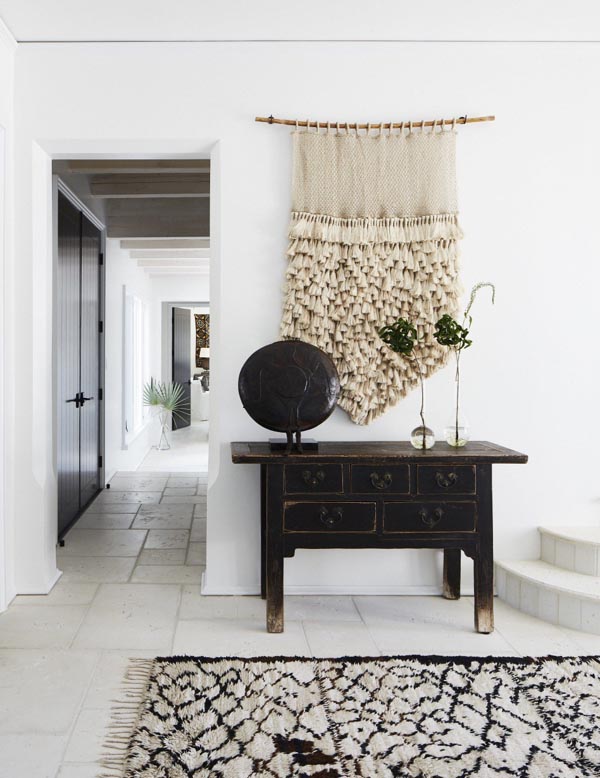
The entry hallway showcases organic textures, natural tones, and the considered layering of materials that defines the Harrison Residence interiors. Photography by William Abranowicz.
Functional Spaces Designed for Real Life
Great architecture does more than look beautiful — it supports the way people actually live. The Harrison Residence excels in this regard, with a range of spaces designed to accommodate both relaxation and productivity. The open-plan kitchen and dining area functions as the social heart of the home, designed equally well for casual family dinners and relaxed entertaining. Custom cabinetry in soft tones complements the light timber and neutral palette, while high-end appliances are integrated seamlessly so as not to interrupt the visual harmony of the space.
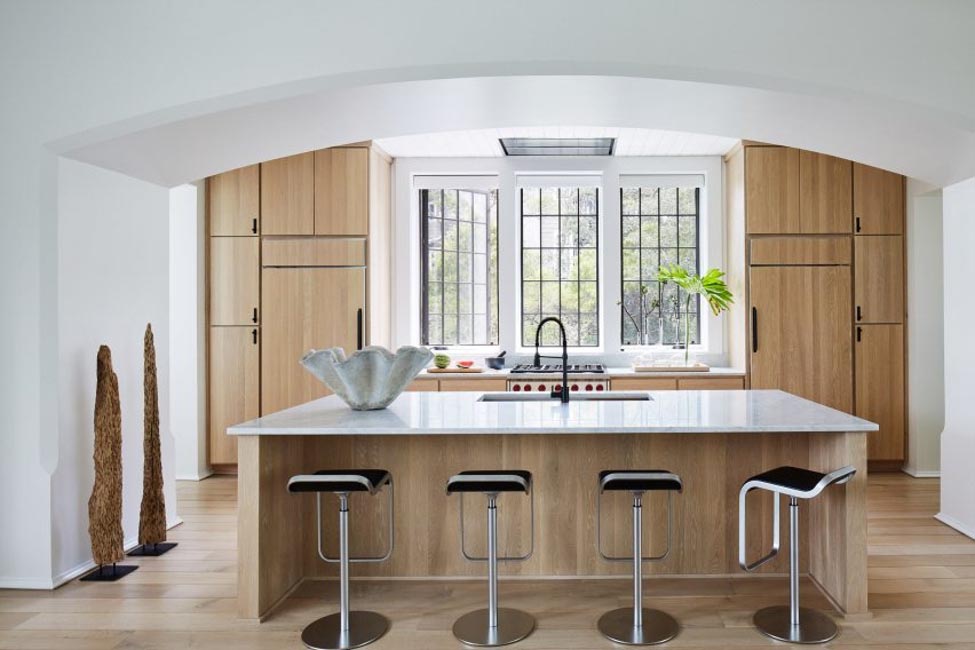
The open-plan kitchen features custom light timber cabinetry, black hardware accents, and a generous island — the social heart of the Harrison Residence. Photography by William Abranowicz.
The master bedroom suite occupies the second floor and delivers exceptional views across the lake. Opening directly onto a private outdoor bathing area, the suite offers a spa-like experience framed by natural stone and coastal vegetation — private, serene, and genuinely luxurious.
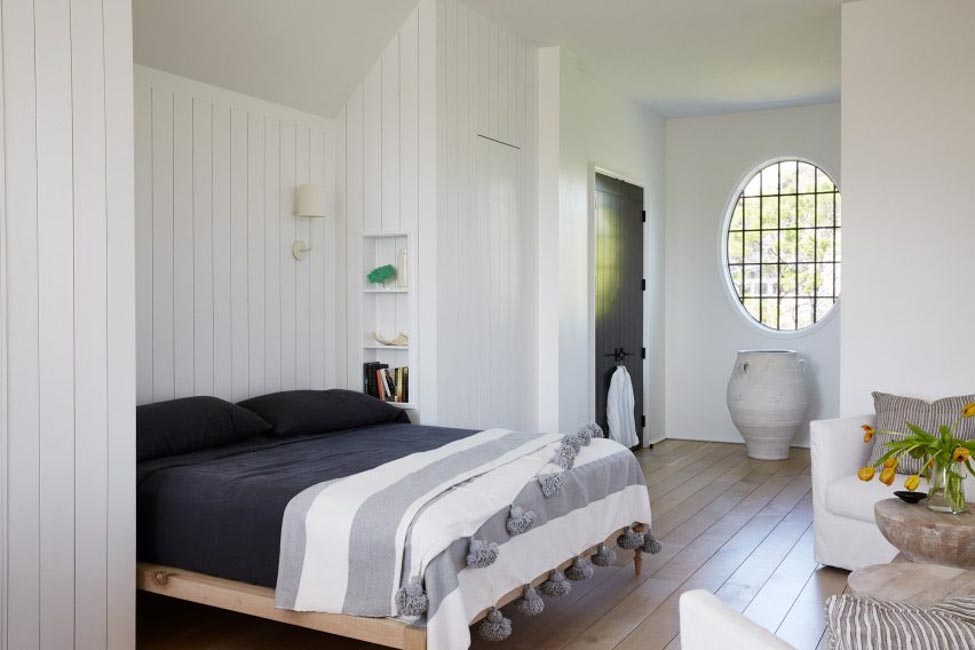
The master bedroom suite — light timber floors, white panelled walls, and a signature circular window frame views of the surrounding landscape. Photography by William Abranowicz. Original Links: https://www.jeffreydungan.com/work/seaside-retreat/ https://www.dezeen.com/2020/03/01/harrison-residence-jeffrey-dungan-architects-florida/
A dedicated home office is thoughtfully incorporated into the layout, positioned to enjoy views of the natural landscape. Custom-built cabinetry and considered furnishing choices ensure this space works as hard as it looks good — an increasingly important feature for Australian homeowners who work from home. On the uppermost floor, a reading nook and bathroom create a quiet retreat from the rest of the household.
Built-in shelves, a generous armchair positioned beside a wide window with panoramic dune views, and a bathroom finished in light stone and brass fixtures bring quiet, understated luxury to the top of the home. Practicality is addressed throughout. A two-car garage tucked beneath the master suite provides secure, convenient storage, while the sprawling second-floor terrace serves multiple purposes — outdoor dining, morning yoga, afternoon reading, or simply taking in the view.
Key Design Features for Hamptons Style Architecture Australia at a Glance
- L-shaped structure maximising lake views and privacy
- Cast-in-place concrete for structural strength and weather resilience
- Crisp white stucco facade — a hallmark of Hamptons design
- Black window frame accents for a contemporary edge
- Light-toned timber floors and ceilings throughout
- Open-plan kitchen and dining as the social heart of the home
- Second-floor master suite with private outdoor bathing area
- Dedicated home office with landscape views
- Top-floor reading nook and light stone bathroom
- Locally sourced, eco-conscious materials throughout
Balancing the Classic and the Contemporary
What distinguishes the Harrison Residence from many other Hamptons-style projects is its confidence in combining the traditional with the bold. The home retains every essential quality of classic Hamptons architecture — the restrained palette, the natural materials, the connection to the coast — while incorporating modern design decisions that keep the residence feeling current and alive.
Cast-in-place concrete and black metal accents would appear in very few traditional Hamptons homes. Here, they read as sophisticated additions rather than jarring departures, demonstrating a design team comfortable enough with the aesthetic to push it thoughtfully forward. Classic coastal furniture is paired with contemporary lighting fixtures and carefully curated modern artwork. Bespoke, custom-made pieces designed specifically for the residence's unique proportions ensure that nothing feels off-the-shelf or afterthought. Environmental responsibility also runs through the project. Locally sourced materials and eco-conscious building practices underline a commitment to sustainability that aligns with the values of many Australian homeowners today. Luxury and environmental consideration, it turns out, are entirely compatible.
What the Harrison Residence Means for Hamptons Style in Australia
The Hamptons aesthetic has been embraced enthusiastically across Australia — from coastal suburbs in Sydney and Melbourne to holiday homes along the Great Ocean Road and Queensland's Sunshine Coast. What the Harrison Residence demonstrates is that this style, at its best, is far more than white walls and shiplap. It is about responding thoughtfully to place, balancing beauty with function, and creating homes that feel as natural in their setting as the landscape surrounding them.
For Australian homeowners, builders, and designers, projects like the Harrison Residence serve as a reminder of what is possible when design ambition is matched with craft and restraint. Whether you are planning a coastal build on the NSW South Coast, renovating a Queensland home in Hamptons style, or simply seeking design inspiration, the principles at work here translate beautifully to the Australian context.
A Timeless Coastal Retreat Worth Studying
The Harrison Residence by Jeffrey Dungan Architects is an exceptional example of how Hamptons style architecture can be adapted to create a coastal retreat that is both classic and contemporary. Through thoughtful design, a deep appreciation of the natural landscape, and a careful balance of materials and elements, the architects have crafted a home that feels at once timeless and modern.
For anyone seeking inspiration on how to create a Hamptons-style residence that embraces elegance, functionality, and resilience, the Harrison Residence serves as a guiding light. By honouring the natural environment while incorporating contemporary design choices, Jeffrey Dungan Architects have achieved a balance that few can replicate — a testament to their expertise and vision. Photography of the Harrison Residence by William Abranowicz.
Frequently Asked Questions
Q: What is Hamptons style architecture? |
| A. Hamptons style architecture originated in the Hamptons region of New York and is defined by its relaxed coastal elegance. Key features include white or neutral exterior colour palettes, natural timber, large windows, covered verandahs, and an emphasis on bringing the outdoors in. It blends classic American coastal design with a sense of refined informality. |
Q: Why is Hamptons style so popular in Australia? |
| A: Australia's coastal lifestyle and love of indoor-outdoor living make it a natural fit for Hamptons design. The aesthetic translates beautifully to Australian beach towns and coastal suburbs, where homeowners seek homes that feel both sophisticated and genuinely relaxed. Its neutral palette also works well with Australia's natural light and landscape. |
Q: What materials are most commonly used in Hamptons style homes? |
| A: Common materials include white or light-painted timber weatherboards, natural stone, white rendered brick or stucco, hardwood or engineered timber flooring, linen and cotton soft furnishings, and brass or matte black fixtures. The Harrison Residence also incorporates cast-in-place concrete as a structural and aesthetic element. |
Q: How does an inland dune lake influence architectural design? |
| A: Building beside a rare ecosystem like an inland dune lake requires architects to consider the surrounding environment carefully. Design decisions — including building orientation, window placement, choice of materials, and landscaping — are all shaped by the need to minimise environmental impact while maximising the experience of the natural setting. |
Q: What is the difference between classic and contemporary Hamptons style? |
| A: Classic Hamptons style adheres closely to traditional coastal American architecture, with shingles, clapboard siding, and traditional detailing. Contemporary Hamptons style incorporates modern elements — such as black window frames, clean geometric lines, and mixed materials like concrete — to create a look that is timeless yet current. The Harrison Residence is a strong example of the contemporary approach. |
Q: Who designed the interiors of the Harrison Residence? |
| A: The interiors were designed in collaboration with Betsy Brown, a highly regarded interior designer known for her expertise in Hamptons-style decorating. Her work brought together a sophisticated neutral palette, natural textures, and carefully selected coastal artwork and furnishings. |
Q: Can Hamptons style architecture work with sustainable building practices? |
| A: Absolutely. As demonstrated in the Harrison Residence, Hamptons style homes can incorporate locally sourced materials, energy-efficient design principles, and eco-conscious building methods without compromising on aesthetic quality. Sustainability and elegance are entirely compatible within this design tradition. |