
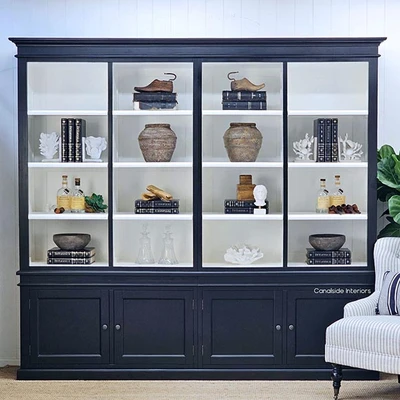
Shelf Decor Ideas for Every Room
Canalside Interiors on 5th Sep 2026
Whether it is a bookcase in the study, a floating shelf in the hallway or the open shelving inside a cabinet, styling a shelf well is one of those small details that makes a space feel complete.
In this guide, we will walk through exactly how to style shelves; from choosing the right piece of decor through to the finishing touches that make a display feel perfectly curated.
Choosing the Right Shelving Piece First
Before you add a single object, think about the shelving itself. The unit you choose sets the tone for everything that goes on or in it.
Different shelving styles suit different purposes. Open bookcases and wall units work well as a feature in a living room, giving you room to mix books with decorative objects. Glass-door bookshelf cabinets suit spaces where you want the display protected from dust, such as a dining room or study. Wall units built around a television strike a balance between storage and styling, since only part of the unit is on show at any time.
If you already have a piece you love, work with its proportions. A tall, narrow bookcase calls for vertical styling with height built in from the base. A long, low wall unit gives you more horizontal space to play with groupings and negative space side by side.
Shelf Decor Ideas: Building Your Colour Palette
The single easiest way to make a shelf look intentional is to work from a colour palette rather than adding items as you collect them. Before you style anything, look at what is already in the room. The wall colour, a feature rug, cushions on the sofa or the tone of the timber in your furniture, can all point you towards a palette that will feel cohesive rather than random.
A simple approach is to choose one main accent colour and one or two neutrals to support it. If your living room already leans into warm timber tones and soft whites, echo that on the shelf with ceramics in a similar tone, natural fibre baskets and a single accent colour such as sage green or terracotta. Trying to include every colour in the room on the shelf itself is one of the fastest ways to make a display feel busy.
Texture matters just as much as colour. Pairing a matte ceramic vase with a glossy stack of coffee table books, or a woven basket with a smooth glass candle holder, adds depth even within a tight colour scheme.
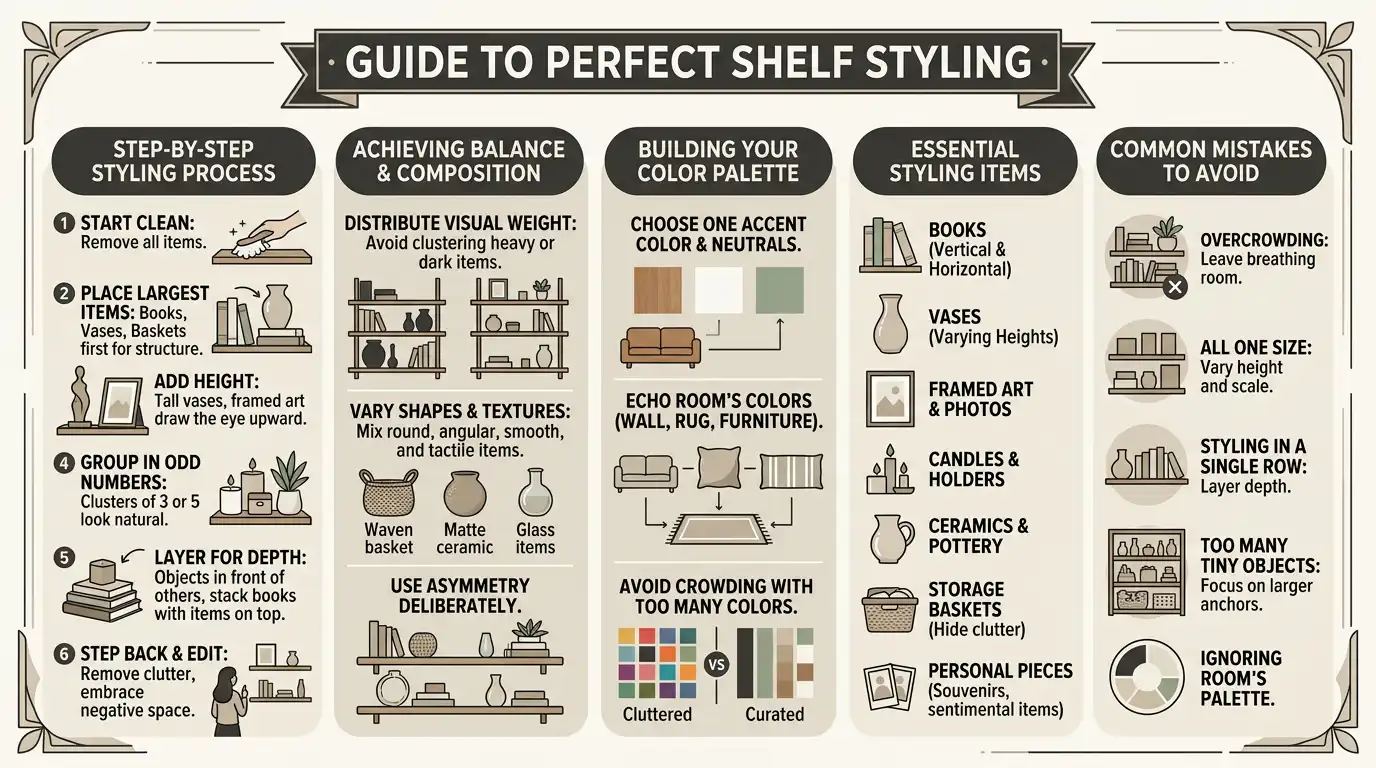
How to Style Shelves Step by Step
Once you know your shelving piece and your palette, shelf styling comes down to a repeatable process. Here is how to style shelves from start to finish.
Step 1: Start With a Clean Slate
Remove everything from the shelf and start fresh. It is much easier to build a considered display from nothing than to try to edit an existing arrangement piece by piece.
Step 2: Place the Largest Items First
Start with your biggest, heaviest pieces. These might be a stack of books, a large vase or a storage basket. Placing these first gives the shelf its structure, and everything else is layered around them. As a general rule, heavier and larger items sit lower on a shelving unit to keep the whole piece feeling grounded.
Step 3: Add Height
Once the anchor pieces are in place, introduce height. Tall vases, framed art propped against the back of the shelf, or a stack of books with a candle or small sculpture on top all draw the eye upward and stop a shelf from feeling flat. If you are working with a run of shelves, avoid placing all your tall items on the same level.
Step 4: Group in Odd Numbers
Objects grouped in threes or fives tend to look more natural than pairs or even numbers. The eye reads odd-numbered groupings as balanced without being too symmetrical or overly staged. Try clustering a candle, a small stack of books and a single decorative object together rather than spacing three unrelated pieces evenly apart.
Step 5: Layer for Depth
A shelf that is styled in a single flat row will always look less finished than one with layers. Lean framed art against the back of the shelf, then place an object in front of it. Stack books flat and rest a smaller item on top. This layering is what separates a considered display from a straight line of objects.
Step 6: Step Back and Edit
Once everything is in place, step back and look at the shelf as a whole from across the room. This is the point to remove, rather than add. If an area feels crowded, take something away. If a section feels empty, that space is doing its job. Negative space is what allows the eye to rest and the styled pieces to stand out.
How to Organise Display Shelves for Balance
Balance on a shelf is less about symmetry and more about distributing visual weight evenly. A shelf with all its dark, bold or oversized items grouped on one side will feel lopsided even if every individual object is beautiful.
To organise display shelves so they feel balanced:
- Spread dark or heavy-looking pieces across the shelf rather than clustering them together
- Pair a large item, such as a vase or basket, with lighter accents like glass or open space on the other side
- Vary the shapes you use. Round bowls, angular books and sculptural pieces placed near one another stop the eye from settling on straight lines only
- Use asymmetry deliberately. A shelf does not need to mirror itself from left to right to feel intentional
If you are unsure whether a shelf is balanced, take a photo of it on your phone. It is often easier to spot uneven weighting in a still image than while standing in front of the shelf itself.
Shelf Decor Items Worth Having on Hand
Having a small collection of go-to decorative pieces makes shelf styling far easier, since you can mix and match rather than starting from scratch each time. A useful starting checklist includes:
- Candles and candle holders in varying heights
- Framed photos or art prints
- Vases in a mix of sizes
- Ceramics and pottery
- Decorative bowls or trays
- Storage baskets for hiding everyday clutter
- Books, both for reading and for their visual weight
- A small sculpture or figurine as a focal point
It is worth including at least one or two personal pieces in the mix, such as travel souvenirs, family photos or sentimental objects. A shelf styled entirely from matching store-bought pieces can look polished, but one with a personal touch is what makes it feel like part of a home rather than a showroom.
How to Decorate Shelves for Every Room
The same styling formula applies across the home, but what you place on the shelf can shift depending on the room.
In a living room, lean into displaying books, art and collected objects that reflect your personal style, since this is the space guests spend the most time in. In a study or home office, functional pieces such as file organisers and storage boxes can be styled alongside decorative items so the shelf stays useful under pressure. In a dining room, glass-door cabinets suit dinnerware and glassware display, keeping everyday pieces dust-free while still on show. In a bedroom, softer, more personal styling with framed photos, a favourite candle and a small plant tends to suit the room's quieter purpose.
Wherever the shelf sits, the underlying approach stays the same: choose a palette, group with odd numbers, vary height and texture, and leave space for the eye to rest.
Looking for the right piece to style? Explore Canalside's bookshelves and glass-door cabinets or browse our range of wall units and bookcases to find a shelving piece that suits your space.
Common Shelf Styling Mistakes to Avoid
Even with a clear process, a few common mistakes tend to trip people up when styling shelves:
- Overcrowding the shelf. Filling every inch leaves no breathing room and makes the whole display harder to read.
- Too many similarly sized objects. Without variation in height and shape, a shelf can look flat and uniform rather than dynamic.
- Styling everything in a single row. Placing objects in one flat line rather than layering front to back makes a shelf feel one-dimensional.
- Too many small decorative pieces. A cluster of tiny objects without a larger anchor piece can look cluttered rather than curated.
- Ignoring the room around the shelf. A colour palette that has nothing to do with the rest of the room will always feel slightly disconnected, no matter how well the shelf itself is styled.
Frequently Asked Questions About Shelf Decor
Q: How do I style shelves like an interior designer? |
| A: Start with a clean shelf, choose a two to three colour palette based on the rest of the room, place your largest items first, then layer smaller pieces around them in odd-numbered groupings. Vary height and texture, and leave open space so the display does not feel crowded. |
Q: What is the rule of three in shelf styling? |
| A: The rule of three refers to grouping decorative objects in odd numbers, typically three or five. Odd-numbered groupings tend to look more natural and balanced to the eye than even numbers, which can appear too symmetrical or staged. |
Q: How much should I put on a shelf? |
| A: Less than you might think. Leaving negative space between objects is part of what makes a shelf look styled rather than cluttered. If a shelf feels crowded once you step back, remove items rather than rearranging them further. |
Q: What is the difference between a shelf and a console table? |
| A: A console table is a freestanding, desk-height piece with legs, typically placed against a wall or behind a sofa. Shelves can be wall-mounted or part of a standalone unit and are generally used across multiple levels for storage and display, rather than as a single surface. |
Q: Can I style shelves without buying new decor? |
| A: Yes. Many of the best shelf styling ideas use what is already in the home, such as books, framed photos and existing ceramics. Walking through your home and gathering pieces you already own is a good first step before buying anything new. |