
What Is an Ottoman? History, Types & Buying Tips
Canalside Interiors on 22nd Aug 2026
You have arranged the sofa, styled the coffee table, and the room still feels like it is missing something. More often than not, that missing piece is an ottoman. Small, low, and easy to overlook in a showroom, it quietly does more work than almost any other piece of furniture in the house.
If you have ever wondered what an ottoman actually is, or whether one would genuinely earn its place in your home, this guide covers everything from its history to how to choose, style and care for one properly. By the end, you should have a clear sense of whether an ottoman suits your space, and exactly which style to look for if it does.
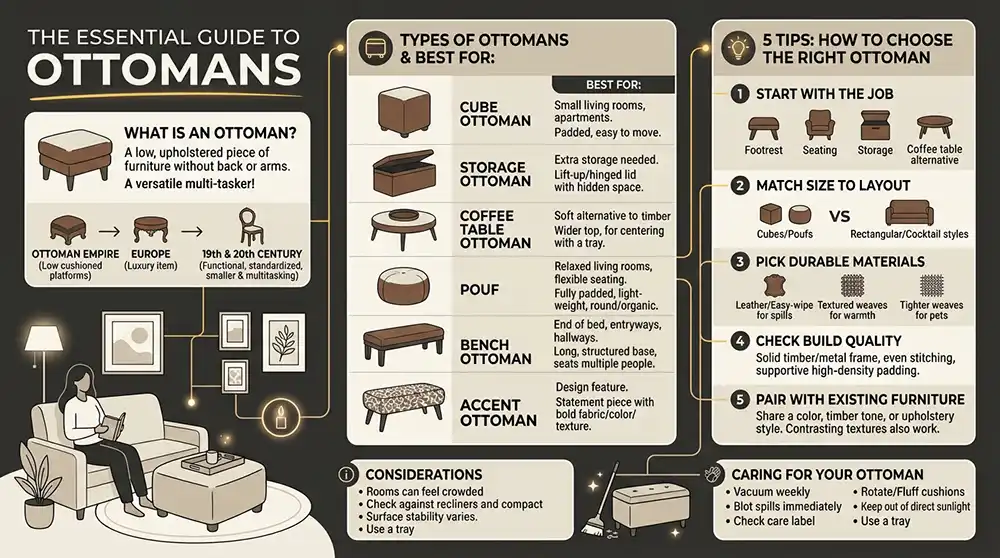
| What is an ottoman? An ottoman is a low, upholstered piece of furniture with no back or arms. It can be used as a footrest, extra seating, a soft alternative to a coffee table, or hidden storage, depending on the style. Ottomans typically sit in front of a sofa, beside an armchair, or at the end of a bed. |
1. What Is an Ottoman & How Is It Used?
An ottoman is a low, upholstered piece of furniture, generally without a back or arms. It can act as a footrest, an extra seat, a soft stand in for a coffee table when paired with a tray, or hidden storage if the top lifts open. Some ottomans are sold as part of a matching sofa or armchair set, while others are freestanding pieces that can go almost anywhere in the home.
What makes an ottoman genuinely useful is its flexibility. Unlike most furniture, which is built for a single job, an ottoman adapts to whatever a room needs at any given moment, which is exactly why it has remained a household staple for so long.
2. A Brief History of the Ottoman
The ottoman takes its name from the Ottoman Empire, where low, cushioned seating was a central part of everyday living and hosting. Early versions were long, low platforms set along the walls of a room, layered with rugs and cushions so people could sit, recline, and entertain guests comfortably.
As trade routes expanded through the 18th century, travellers brought this style of furniture back to Europe, where it was initially seen as exotic and luxurious. Through the 19th century, the ottoman gradually shifted from a symbol of wealth into a genuinely functional household piece, gaining hinged lids for storage and more standardised upholstered forms. By the 20th century, its footprint had shrunk to suit smaller apartments, while its function expanded further still, with pull out trays and reversible lids turning it into an early version of the multitasking piece we know today.
3. Types of Ottomans
Not all ottomans are built for the same job. Knowing the main types makes it easier to match one to your space.
| Type | Description | Best For |
| Cube Ottoman | Square or rectangular, compact and padded, easy to move | Small living rooms and apartments |
| Coffee Table Ottoman | Wider, upholstered top, typically designed to sit in the centre of a room, often paired with a tray | Living rooms wanting a softer alternative to a timber or glass coffee table |
| Storage Ottoman | Features a lift up lid or hinged top with hidden space inside | Living rooms and bedrooms that need extra storage |
| Pouf | Round or organic shape, fully padded, no visible legs, lightweight | Relaxed living rooms and flexible seating areas |
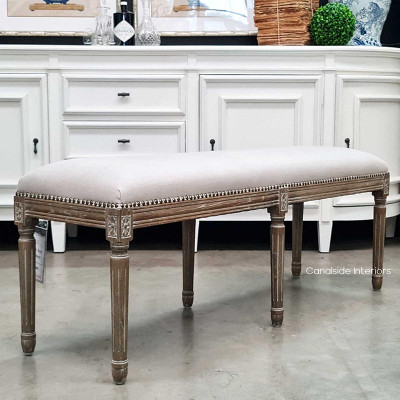
| Bench Ottoman | Long and low with a structured base, can seat more than one person and or be used for additional storage if featuring shelving underneath | End of bed, entryways, and hallways |
| Accent Ottoman | Statement piece in bold fabric, colour, or texture | Living rooms and entryways wanting a design feature |
4. Things to Consider Before Buying
An ottoman is not the right fit for every room, and it is worth noting the below points before buying one.
Smaller rooms can feel crowded. An extra piece on the floor may interrupt walkways in a tight layout, so careful placement matters more than in a larger room.
Not always necessary with a recliner. If your sofa already has built in footrests, a separate ottoman can end up feeling redundant and constantly in the way.
Surface stability varies by design. A softer, more cushioned top is comfortable to sit on but less steady than a traditional timber or glass coffee table, so a tray is worth adding if you plan to use it for drinks or décor.
5. How to Choose the Right Ottoman
Choosing an ottoman is easier once you start with how you actually plan to use it, then work backwards to size and material.
Start with the job you want it to do. For a footrest, look for a cushioned top at a height that lines up with your sofa seat. For extra seating, choose a sturdier frame with a flatter top. For storage, look for a lift up lid. For a coffee table stand in, choose a wider style that comfortably holds a tray.
Match the size to your layout. Cubes and poufs suit smaller rooms and tuck away easily, while a larger rectangular or cocktail style helps fill a bigger living room without looking lost. If your sofa is a sectional, a matching modular ottoman can extend the chaise feel.
Pick a material suited to real life. Leather or easy wipe fabrics handle spills and sticky fingers well, which matters in a busy family home. Textured weaves and softer upholstery bring warmth to a room, while tighter weaves tend to be more forgiving in homes with pet.
Check the build quality. A solid timber or metal frame will outlast particleboard, and neat, even stitching with no loose threads is a good sign of genuine craftsmanship. Supportive, high-density padding will hold its shape for years, over a cheaper alternative that may sink-in after a few months of use.
Think about how it will pair with existing furniture. An ottoman does not need to match your sofa exactly, but it helps to share at least one element, whether that is a timber tone, a colour from your existing palette, or a similar upholstery style. A contrasting texture, such as a leather ottoman with a linen sofa, can also work well if you want a bit of visual interest rather than a fully matched set.
6. Styling Your Ottoman
Styling an ottoman is less about strict rules and more about intention, thinking through balance, function, and how the piece fits your daily routine.
Work with your existing colour palette. A neutral ottoman keeps a room calm, while a richer tone or pattern can lift a flat space and add a point of interest.
Place it where it solves a problem. In front of a sofa, it can replace a coffee table entirely. At the end of a bed or in an entryway, it becomes genuinely useful seating that still looks considered.
Add texture rather than clutter. Leather, boucle, or a woven fabric all bring depth to a room without needing extra decorative objects competing for attention.
Use a tray to add structure. A tray instantly makes a soft surface feel purposeful, grouping drinks, books, or a candle together rather than leaving them scattered.
Scale it to the room. A compact style tucks neatly beside existing furniture in a smaller space, while a wider ottoman can anchor a seating area in a larger living room.
7. Caring for Your Ottoman
A little regular care keeps an ottoman looking good for years rather than months.
- Vacuum weekly to remove dust and debris before it settles into the fabric
- Blot spills immediately with a clean cloth rather than rubbing, to avoid setting a stain
- Check the manufacturer's care label before using any cleaning product
- Rotate and fluff cushioned tops occasionally to maintain their shape
- Keep leather and fabric out of prolonged direct sunlight to reduce fading
- Use a tray on top if it will regularly hold drinks or snacks, to protect the surface
| Browse our full range of ottomans to find the right piece for your home. |
Frequently Asked Questions About Ottomans
Q: What is the purpose of an ottoman? |
| A: The purpose of an ottoman is to add comfort and flexibility to a room. It can work as a footrest, extra seating, a soft coffee table alternative, or hidden storage, depending on the style you choose. |
Q: Are ottomans suitable for small spaces? |
| A: Yes, especially compact styles like cubes or poufs that tuck neatly beside existing furniture. They offer extra function without the bulk of a full sized chair or table, which makes them well suited to apartments and tighter layouts. |
Q: What is the difference between an ottoman and a pouf? |
| A: An ottoman typically has a more structured frame, often with a hinged lid for storage, while a pouf is fully padded, has no visible legs, and is generally softer and lighter to move around. |
Q: Can an ottoman replace a coffee table? |
| A: Yes, many people use a wider ottoman as a softer alternative to a hard coffee table. Adding a tray on top gives it a stable surface for drinks, books, or décor while keeping the softer, more relaxed feel underneath. |
Q: What is the average size of an ottoman? |
| A: The average size varies by type, but most standard ottomans range between 45 and 65cm in height and 45 to 100cm in width or length. Larger coffee table style ottomans can be wider, while cube and pouf styles are typically more compact. |
Q: How do I clean an ottoman? |
| A: Vacuum weekly to remove dust and debris, and blot any spills immediately with a clean cloth rather than rubbing. Always check the manufacturer's care label first, since the right cleaning method depends on whether the upholstery is leather, fabric, or a performance textile. |