
What Is Hamptons Style? The Australian Guide
Canalside Interiors on 25th Mar 2026
What is Hamptons style? It's one of the most searched questions in Australian interior design — and for good reason. This relaxed, coastal-inspired aesthetic, born from the beachside estates of Long Island, New York, has become one of Australia's most enduring home styles. Light-filled rooms, natural timber floors, linen sofas, and a seamless connection to the outdoors — the Hamptons look feels both timeless and genuinely suited to the way Australians live. The short answer: Hamptons style is a relaxed, coastal-inspired interior design aesthetic that blends classic American beach house elegance with natural materials and a light, neutral colour palette.
In Australia, it has been adapted to suit our sun-drenched coastal lifestyle — think crisp white and warm timber tones, linen fabrics, rattan accents, and furniture that balances sophistication with everyday comfort. It is one of Australia's most enduring interior styles because it feels both timeless and genuinely liveable. What is Hamptons style at its core? It's synonymous with relaxed coastal luxury.
Often associated with the sophisticated beach houses lining New York's Long Island, this design aesthetic has well and truly transcended its American roots — and nowhere has it been embraced more wholeheartedly than here in Australia. Walk through any display home on the Mornington Peninsula, browse a Sydney showroom, or flick through an issue of Inside Out or Homes to Love, and you'll see the Hamptons look everywhere.
Light-filled rooms, white shiplap walls, natural timber floors, generous linen sofas — it has become the benchmark for aspirational Australian coastal living But the Australian Hamptons style has a fascinating history of its own. It didn't arrive here fully formed from New York. It evolved, absorbed local influences, and adapted to suit our climate, our way of life, and our love of the outdoors. This guide explores that evolution — and covers everything you need to know about bringing the Hamptons look into your own home, from the key furniture pieces to the finishing touches that make it sing.
Colonial Influences: The Origins of Australian Hamptons Style History
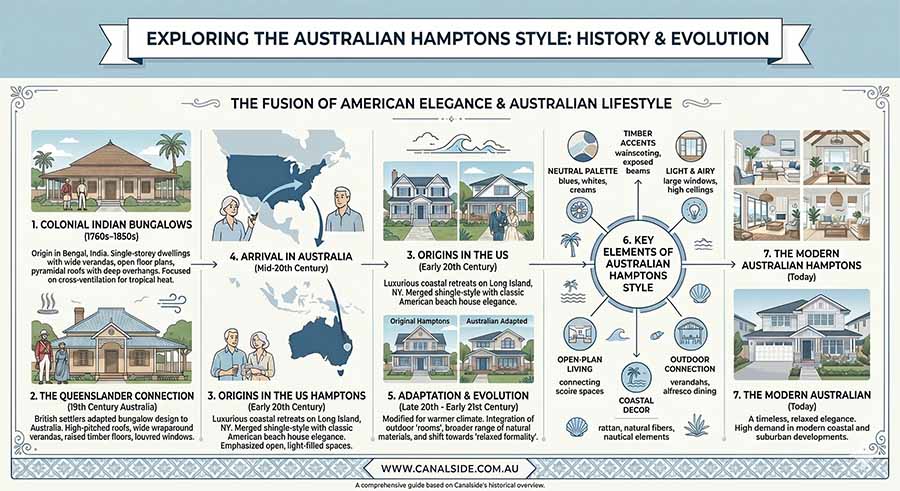
To understand why the Hamptons style feels so at home in Australia, you need to go back further than Long Island. The origins of the aesthetic actually trace back to colonial India, where British colonists encountered local 'bangla' architecture — the bungalows that emerged between the 1760s and 1850s in Bengal. These homes were brilliantly practical. The hot, humid climate of Bengal demanded open, breezy layouts, wide verandas, and shaded outdoor spaces designed to maximise airflow and provide shelter from the tropical heat. The British, thoroughly impressed by their functionality, adapted and exported the style to their colonies — including Australia. The influence is clear when you look at the classic Australian Queenslander.
With its raised timber floors, wide wraparound verandas, louvred windows, and focus on cross-ventilation, the Queenslander shares its DNA with both the Indian bungalow and the Hamptons style that would follow. The emphasis on connecting inside to outside, maximising natural light, and creating breezy, comfortable living spaces is a thread that runs through all three. Decorative elements also made the journey — carved timber detailing, light open interiors, and a sense of generous proportion that later became hallmarks of the Hamptons aesthetic. It is a genuinely global story that found a very natural home on Australian soil.
Evolution of Australian Hamptons Style in Modern Homes
So what is Hamptons style in the Australian context? It took hold as designers and homeowners recognised how naturally the aesthetic suited our coastal settings. The wide sandy beaches, brilliant sunshine, and relaxed outdoor lifestyle of the Australian coast mirror the very conditions that gave rise to the Hamptons look in the first place. Australian homes began incorporating the signature elements — white weatherboard exteriors, gabled rooflines, large open-plan living areas, and seamless connections to outdoor entertaining spaces. But what emerged wasn't a carbon copy of the American original. It was something distinctly our own. The Australian version tends to sit more casually than its American counterpart.
Where a traditional Hamptons home in New York might lean towards polished formality, the Australian interpretation prioritises a relaxed, welcoming feel — what we might call 'dressed-up comfort.' Soft furnishings in natural fabrics, whitewashed timber floors, rattan occasional chairs, and an easy flow between the kitchen, living, and alfresco areas all speak to the way Australians actually live.
The Coastal Connection: Bringing the Outside In
One of the defining characteristics of Australian Hamptons homes is the seamless integration of indoor and outdoor living — something that resonates deeply with the Australian way of life. Large bi-fold or sliding stacker doors that open the living room directly onto a covered alfresco area are a Hamptons staple in Australia. The verandah or deck isn't an afterthought — it's considered part of the home's primary living space.
In Queensland and coastal New South Wales, these outdoor rooms are used year-round; in Victoria and South Australia, they're designed for the long, warm months from October through April. The versatility of the Hamptons style allows it to adapt beautifully to Australia's diverse coastal regions. From the rugged drama of the Great Ocean Road to the relaxed sub-tropical vibes of the Sunshine Coast, the aesthetic shifts subtly to reflect its surroundings while maintaining its signature sense of light, space, and ease.
Materials and Colour Palette in Australian Hamptons Style History
Understanding what is Hamptons style also means understanding its material language. A hallmark of the style is its emphasis on natural materials and a light, airy colour palette — and in Australia, these have been thoughtfully adapted to suit both our climate and our local landscape.
Natural Materials
Traditional Hamptons homes feature timber, shingle cladding, and stone. Australian versions often incorporate locally sourced alternatives — weathered hardwood, sandstone, and natural stone that feel genuinely connected to the environment. Recycled and reclaimed materials are increasingly popular, with reclaimed timber for floors and feature walls adding character and a sense of history. Inside, the material palette leans into texture: linen and cotton upholstery, jute and sisal rugs, rattan and wicker occasional pieces, and whitewashed or oiled timber floors that feel warm underfoot. These are materials that look beautiful, age gracefully, and — importantly — cope well with sandy feet and salt air.
Colour Palette
The classic Hamptons colour palette centres on white — crisp whites, warm off-whites, and soft whites with a hint of grey or cream. From there, the palette fans out into soft greys, coastal blues, and natural sand tones. Australian designers have introduced warmer accents to the palette — muted sage greens that echo the eucalyptus bush, warm terracotta notes that reflect the sandstone coast, and deeper navy tones that feel right at home beside the ocean.
The result is a palette that feels sophisticated and fresh while remaining unmistakably Australian. Practically speaking, the light colour palette also serves our climate well. Light-coloured exteriors and interiors reflect sunlight, keep homes cooler through our long, hot summers, and create a sense of spaciousness that feels genuinely airy rather than stark.
Hamptons Style Furniture — The Key Pieces
Furniture is where what is Hamptons style becomes tangible — this is where the aesthetic really comes to life, and getting the key pieces right makes all the difference. The guiding principle is classic over trendy, quality over quantity, and comfort without compromise.
Sofas and Armchairs
The centrepiece of any Hamptons living room is a generously proportioned sofa — typically slipcovered or upholstered in linen, cotton, or a linen-cotton blend in white, ivory, warm grey, or soft navy. Look for deep seats, clean lines, and a silhouette that feels classic without being stiff or formal. A casual linen slipcover in natural white is arguably the most iconic Hamptons furniture piece there is. Pair the sofa with one or two armchairs in a complementary fabric or weave — a rattan occasional chair, a classic upholstered armchair, or a wicker tub chair all work beautifully. The aim is a layered, lived-in sitting room that invites people to settle in and stay awhile.
Cabinets, Bookcases and Storage
Cabinetry and storage pieces are an important part of the Hamptons interior. Shaker-style doors in white or off-white paint, glass-panelled inserts, and classic hardware in brushed nickel or aged brass all signal the style immediately. Freestanding bookcases and display cabinets with open shelving add architectural interest and give you space to style with books, ceramics, and coastal decorative objects. In the living room, a substantial sideboard or buffet in painted timber or a light oak finish works as a grounding piece that anchors the space. In the hallway, a classic console with a rattan basket or two underneath balances practicality with style.
TV and Entertainment Units
In Australian Hamptons homes, the entertainment area is typically anchored by a substantial TV unit or wall unit that spans much of the wall — often combining open shelving with closed storage, and sometimes incorporating a fireplace surround or built-in cabinetry. The key is choosing a piece with enough presence to balance a modern flat-screen TV without looking like a flat-pack afterthought. Look for TV units in painted white, light grey, or natural timber finishes with shaker-style door fronts, timber or rattan detail panels, and classic metal hardware. A wall unit that runs floor-to-ceiling creates the kind of considered, architectural feel that defines a genuinely well-executed Hamptons room.
Dining Furniture
A large timber dining table — often in a light oak, whitewashed, or painted finish — with upholstered dining chairs is a Hamptons staple. The dining area is designed for gathering and entertaining, so scale matters: go larger than you think you need, and choose chairs with a linen or cotton seat pad for comfort during long Sunday lunches. Round dining tables work particularly well in Hamptons interiors, softening the architecture and encouraging conversation. Rectangular tables suit longer rooms and work beautifully with a mix of dining chairs and a bench seat on one side.
Hamptons Style Decor — The Finishing Touches
The furniture provides the bones of a Hamptons room, but it's the decor layer that gives it soul — and gets it over the line from 'nice neutral room' to 'unmistakably Hamptons.'
Texture is Everything
The Hamptons look is built on texture as much as colour. Woven rattan baskets, jute or sisal floor rugs, linen cushion covers, cotton throws, and seagrass storage pieces all add the tactile richness that makes a room feel genuinely inviting. Don't be afraid to layer textures — a linen sofa, a jute rug, and a rattan side table work together effortlessly.
Soft Furnishings
Cushions and throws are one of the easiest ways to shift a room towards the Hamptons palette. Work in white, ivory, navy, soft sage, and warm sand tones — a mix of solid colours, subtle stripes, and gentle textured weaves. Linen is the fabric of choice for its casual elegance and the way it softens beautifully over time. Window treatments in Hamptons interiors tend to be simple and generous — floor-length linen curtains in white or natural, often with a relaxed pleat or eyelet heading that puddles slightly on the floor. Keep hardware simple: timber or white painted rods with minimal fittings.
Lighting
Lighting plays a significant role in the Hamptons aesthetic — and it's an area where Australian designers have really made the style their own. Large pendant lights over dining tables in rattan, wicker, or seagrass are a signature piece. In living rooms, layered lighting — a combination of ambient downlights, table lamps with linen shades, and floor lamps — creates the warm, welcoming atmosphere that the style demands. Avoid anything too industrial, too minimalist, or too obviously contemporary. The Hamptons look gravitates towards classic lamp shapes, simple ceramic or timber bases, and shades in white or natural linen.
Artwork and Decorative Objects
Coastal-inspired artwork is a natural fit — seascape paintings or prints, botanical illustrations, or simple architectural line drawings in white, timber, or natural linen frames. Gallery walls work beautifully in Hamptons interiors when kept to a consistent palette and frame style. Decorative objects should feel curated rather than collected. Oversized ceramic or glass vases with simple dried arrangements — pampas grass, eucalyptus, coastal grasses — work particularly well. Stack a few coffee table books, add a woven tray to corral decorative items on a sideboard, and keep the overall feel considered and uncluttered.
Embracing Alfresco Living: The Great Australian Outdoors
In Australia, the connection between indoor and outdoor living is not just a design choice — it is a way of life. Australian Hamptons homes make the most of outdoor spaces by creating alfresco dining areas, covered verandahs, and garden lounges that feel like genuine extensions of the interior. French doors and bi-fold windows are common features, physically and visually blurring the boundary between inside and out. When the doors are open on a warm autumn afternoon, the lounge room, the alfresco, and the garden become one continuous living space.
Outdoor furniture mirrors the interior aesthetic — natural teak, hardwood, or powder-coated aluminium frames softened with outdoor cushions in light, neutral tones. Wicker and rattan-look outdoor pieces have become increasingly popular and weather well in most Australian climates. Outdoor kitchens, fire pits, and generous dining settings are designed for year-round use, reflecting Australia's mild climate and deep-seated love of entertaining outdoors. Gardens in Hamptons homes tend towards a relaxed, coastal-inspired palette — low-maintenance coastal grasses, lavender, rosemary, olive trees, and natives like coastal banksia and lomandra. These choices feel both beautiful and genuinely practical for water conservation in a country that knows how to do drought.
Sustainability and the Future of Australian Hamptons Style
As sustainability becomes increasingly central to Australian home design, what is Hamptons style continues to evolve in response. Homeowners are thinking more carefully about eco-friendly materials, energy-efficient design, and building choices that minimise environmental impact without compromising on style — and the Hamptons aesthetic adapts naturally to these values. Recycled and reclaimed timber, sustainably sourced stone, and low-VOC paints are becoming the default rather than the exception in new Hamptons builds and renovations. The preference for natural materials that the style has always championed aligns beautifully with a more considered approach to consumption.
Smart Home Integration
Modern Australian Hamptons homes increasingly incorporate smart home technology — automated lighting, climate control, and solar power systems that complement the aesthetic rather than competing with it. Concealed cables, integrated speakers, and flush-mounted switches keep the look clean and uncluttered. The goal is a home that is as intelligent as it is beautiful, and as efficient as it is elegant. For those looking to build or renovate, the focus is increasingly on creating spaces that are both gorgeous and genuinely sustainable — rainwater harvesting, high-performance thermal insulation, double glazing, and native gardens that thrive with minimal irrigation. The Hamptons style down under is not standing still; it is evolving to meet the demands of modern Australian life.
Frequently Asked Questions About Hamptons Style
Q: What is Hamptons style in interior design? |
| A: Hamptons style is a coastal-inspired interior design aesthetic that originated in the beachside communities of Long Island, New York, and has been widely adopted in Australia. It is characterised by a light, neutral colour palette, natural materials such as timber and linen, classic furniture silhouettes, and a strong emphasis on indoor-outdoor living. In Australia, the style has been adapted to suit our climate and lifestyle, resulting in a look that feels relaxed, timeless, and genuinely liveable. |
Q: What colours are used in Hamptons style? |
| A: The Hamptons colour palette centres on white and off-white tones, complemented by soft greys, natural sand and beige, and coastal blues and navies. In Australian interpretations, warmer tones such as muted sage green, warm terracotta, and natural timber hues are often introduced to reflect the local landscape. The overall effect is light, airy, and fresh — sophisticated without being cold. |
Q: What furniture is typical in a Hamptons style home? |
| A: Key Hamptons furniture pieces include linen-upholstered or slipcovered sofas in white or ivory, classic armchairs in natural fabrics or woven rattan, shaker-style cabinetry and bookcases in white or light timber, substantial TV units or wall units with closed and open storage, and large timber dining tables paired with upholstered dining chairs. The common thread is classic proportion, quality materials, and a relaxed elegance that feels comfortable for everyday living. |
Q: What is the difference between Hamptons and Coastal style? |
| A: While both styles share a love of light colours and natural materials, Coastal style tends to be more casual, more colourful, and more overtly beach-inspired — with nautical motifs, bolder blues, and a rawer, more relaxed feel. Hamptons style is more refined and considered: the palette is more restrained, the furniture more classic, and the overall aesthetic leans towards understated elegance rather than seaside casual. Think of Coastal as a beach shack done beautifully, and Hamptons as a beach house done elegantly. |
Q: How do I achieve the Hamptons look in my Australian home? |
| A: Start with a light, neutral base — white or off-white walls, whitewashed or light oak timber floors, and white or light grey cabinetry. Layer in natural textures through linen soft furnishings, a jute or sisal rug, and rattan occasional pieces. Choose furniture with classic, clean-lined silhouettes in natural fabrics. Connect your living space to an outdoor area where possible, and keep the overall feel uncluttered and airy. The key is quality over quantity — a few well-chosen pieces will always outperform a room full of trend-driven accessories. |
Celebrating the Australian Hamptons Style
The Australian interpretation of the Hamptons style is something genuinely special — a beautiful synthesis of colonial history, coastal charm, and modern liveability that has found its natural home in this country. From its roots in the bungalows of colonial India, through the verandahed farmhouses of rural Queensland, to the light-filled beach houses of the Mornington Peninsula and the Northern Beaches, the Hamptons style has been shaped by Australian hands and Australian lives. It has been adapted, refined, and made our own.
For Australian homeowners seeking an interior aesthetic that is timeless without being stale, sophisticated without being stiff, and beautiful without being impractical, the Hamptons style continues to deliver. It celebrates heritage, embraces the outdoors, and above all, creates homes that people genuinely love to live in. Whether you're starting from scratch, refreshing a room, or simply looking for a few key pieces to tie a space together, the Hamptons look rewards considered choices and quality materials. Get the furniture right, layer in the texture, bring the outside in — and the rest follows naturally.
| Ready to bring the Hamptons look into your home? Visit us at our Alexandria showroom or browse our full furniture range online. → Shop Hamptons furniture at Canalside Interiors, Alexandria |