
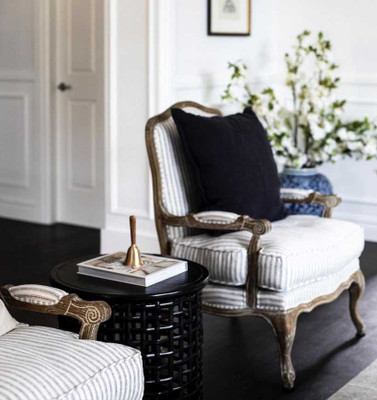
7 Key Differences in Australian Hamptons Style vs American
Canalside Interiors on 29th Apr 2026
If you've spent any time scrolling through home design inspiration online, chances are you've fallen in love with the effortless elegance of Hamptons style. But here's something many Australians don't realise: the Hamptons look you see in a Sydney beachside suburb is actually quite different from the original American version it was inspired by.
Australian Hamptons style has evolved into its own distinct design language — one shaped by our unique climate, landscape, and laid-back way of life. In this guide, we explore what Hamptons style is all about and break down the key differences between the Australian and American interpretations, so you can make more informed choices when bringing this timeless aesthetic into your own home. Understanding what sets Australian Hamptons style apart is the first step.
The Essence of Hamptons Style: A Shared Foundation
Before diving into the differences, it's worth understanding what unites both versions of the style. At its heart, Hamptons design is about relaxed sophistication — a way of living that feels polished and put-together without being stiff or formal. Whether you're looking at a grand estate on Long Island or a coastal home in Noosa or Newport, the shared hallmarks of Hamptons style include:
- A neutral, coastal-inspired colour palette built on whites, blues, and warm creams
- Generous natural light flowing through large windows and glass doors
- A seamless connection between indoor and outdoor living spaces
- Quality craftsmanship and carefully chosen furniture with clean, considered lines
- Natural materials such as timber, linen, stone, and rattan
This is the foundation that makes Australian Hamptons style so enduringly popular. Both American and Australian Hamptons homes share these principles. But dig a little deeper and you'll find that the Hamptons colour palette, materials, architectural details, and interior sensibility diverge significantly between the two countries.
Environmental Cues: Adapting to the Local Landscape
One of the most significant forces shaping any architectural style is the environment in which it was born. Hamptons design originated in the coastal towns of Long Island, New York — an area characterised by mild summers, brisk ocean winds, and a cooler four-season climate.
The American Environment
American Hamptons homes were designed with the North Atlantic coastline in mind. If you're curious about the origins of Hamptons design in America, it's a story rooted in East Coast prestige and traditional craftsmanship. The colour palette — cool whites, soft greys, deep navy, and sandy neutrals — directly mirrors the bleached driftwood, white sand, and grey-blue ocean of the New England coast.
The architecture leans into the elements: shingle cladding that weathers beautifully over time, deep-set windows that handle harsh winters, and grand chimneys that serve both aesthetic and practical purposes during cold months. Because the American Hamptons has historically been associated with old money and East Coast prestige, the style carries a more formal, structured energy. Symmetry, architectural grandeur, and traditional detailing are hallmarks of the original American version.
The Australian Environment
Australian Hamptons style draws from a coastal landscape that shares some DNA with coastal New England — bright light, white sandy beaches, and blue-green surf — which is precisely why Hamptons style translates so naturally here. However, our climate is considerably more diverse and, in many parts of the country, far more extreme. In urban coastal settings like Sydney's Northern Beaches, Melbourne's Mornington Peninsula, or Queensland's Sunshine Coast, Australian Hamptons homes lean into the Australian coastal interior design tradition — breezy, light-filled, and built for year-round outdoor living.
In rural or regional areas, the palette often incorporates earthy eucalyptus greens, caramel browns, and soft ochres that echo the surrounding bushland. Australia's intense sunlight is also a critical factor. Colours behave differently under our sun — stark whites can feel clinical and overly bright, so Australian Hamptons interiors favour warmer off-whites and greige tones that remain welcoming under strong natural light. High ceilings, cross-ventilation, and shaded verandahs are design features that reflect the practical needs of living in a hot climate.
| Exploring the Australian Hamptons look for your own home? Browse our full Hamptons furniture collection → |
Choice of Materials: Timeless Charm Meets Durability
When it comes to Australian Hamptons style, material selection is one of the clearest points of difference between American and Australian Hamptons homes. Understanding these choices is essential when planning your own Hamptons-style architecture in Australia.
American Materials: Old-World Craftsmanship
Traditional American Hamptons homes are celebrated for their use of premium natural materials that age gracefully and carry a sense of heritage. Cedar or pine timber shingles are the defining exterior feature — they weather to a beautiful silver-grey over time and are deeply associated with the East Coast aesthetic. Stone cladding, red brick chimneys, and painted weatherboard cladding are also common, contributing to a sense of permanence and old-world charm. Inside, American Hamptons homes feature wide-plank timber floors, marble or stone benchtops, and plush upholstery in natural fabrics. Dark timber furniture anchors formal living spaces, while elaborate crown moulding, wainscoting, and detailed architraves add a layer of traditional craftsmanship that feels quintessentially American.
Australian Materials: Built for the Climate
Australia has adapted the Hamptons material palette with practicality firmly in mind. While traditional weatherboards are used, many Australian builders now favour fibre cement weatherboards such as Linea Weatherboards, which offer the classic Hamptons look without the warping, cracking, or fire risk associated with natural timber in our climate — particularly important in fire-prone regions across New South Wales, Victoria, and Queensland. Red and cream brick remain a staple of Australian residential construction and integrate naturally into the Hamptons aesthetic.
Modern Australian Hamptons homes also increasingly incorporate materials that improve energy efficiency, an important consideration given Australia's energy efficiency standards and the country's extreme seasonal temperatures. Indoors, Australian Hamptons homes favour lighter-coloured timber floors — often in a whitewashed or limewash finish — alongside stone benchtops. Natural linen, cotton, and rattan and wicker furniture reflect the relaxed coastal lifestyle that defines the Australian Hamptons sensibility.
Decorative Elements and Architectural Detailing
Step inside an American Hamptons home and you're likely to be struck by the level of architectural detail. Intricate crown moulding, coffered ceilings, detailed gable rooflines, and elaborate window surrounds are signature features. These ornamental elements reflect a strong neoclassical European influence that has long been part of American residential architecture — a stark contrast to Australian Hamptons style. Australian Hamptons homes simplify these details considerably, arriving at what many designers call a 'Modern Australian Hamptons' aesthetic. Gable rooflines are present but cleaner; beadboard panelling replaces ornate wainscoting; and the overall ornamentation is pared back.
Our guide to modern Australian Hamptons homes covers the key architectural features to consider for your build. Joinery is another area where the two countries diverge. American Hamptons homes tend towards traditional cabinet styles with elaborate hardware. Australian versions favour Shaker-style cabinetry in white or soft grey, with simple brushed nickel or matte black handles. The effect is cleaner, more contemporary, and better suited to open-plan Australian living.
Verandahs and Outdoor Spaces: Australia Takes It Further
Both American and Australian Hamptons homes place great importance on outdoor living, but Australia takes this concept to another level entirely. Our guide to the Hamptons home exterior explains the architectural elements that make this work. American Hamptons properties typically feature elegant timber decks, manicured gardens, swimming pools, and outdoor dining areas designed for summer entertaining. These spaces are beautifully presented but are often seasonal — cold Atlantic winters mean outdoor living is concentrated in the warmer months.
In Australia, where the climate allows — and in many regions encourages — year-round outdoor living, the approach is fundamentally different. Wraparound verandahs, often reminiscent of traditional Queenslander homes, are a defining feature of Australian Hamptons architecture. These aren't afterthoughts; they're integrated into the home's design as genuine living spaces, complete with outdoor kitchens, lounge settings, ceiling fans, and built-in barbecues. Large bi-fold or stacking sliding doors that fully open the interior living areas to the outdoors are standard in Australian Hamptons homes. This architectural move dissolves the boundary between inside and outside, making homes feel considerably larger and more connected to the environment — something that's essential in a culture that genuinely lives outdoors for much of the year.
Hamptons Style Interiors: Formal vs. Relaxed
Perhaps the most profound difference between the two styles lies in how each country approaches the interior. Our full guide to Hamptons-style interior design covers these principles in detail, but the core contrast comes down to formality versus ease.
American Hamptons Interiors
American Hamptons interiors tend to be more structured and traditionally formal. Rooms have clearly defined functions: a formal dining room, a dedicated living room, a library or study. Furniture is often larger in scale, darker in tone, and more heavily upholstered. Symmetry is deliberately enforced — matching lamps, pairs of armchairs, and mirrored furniture arrangements are common. The overall effect is one of considered elegance that nods to traditional English country house design filtered through an East Coast American lens.
Australian Hamptons Interiors
Australian Hamptons style interiors embrace open-plan living as a fundamental design principle. The kitchen, dining, and living areas typically flow together as a single connected space, often extending directly out to the alfresco area. This layout suits the Australian lifestyle, where the home is a place of relaxed gathering rather than formal entertaining.
Furniture choices reflect this ease: natural linen sofas in warm cream or soft grey, rattan pieces that add texture without weight, and whitewashed timber coffee tables that feel collected rather than matched. Colour is introduced through soft blue cushions, coastal artwork, and patterned rugs rather than through paint or heavy upholstery. The bedroom in an Australian Hamptons home is a sanctuary of calm: white bedding layered with linen throws, a navy or blue-striped bedhead as the hero piece, matching white bedside tables, and subtle rattan or natural timber accents. It's a look that feels effortless precisely because each element has been chosen with restraint.
| Exploring the Australian Hamptons look for your own home? Browse our full Hamptons furniture collection → |
The Colour Palette: How Australia Has Made It Its Own
Colour is one of the most powerful tools in any interior design scheme, and the Hamptons palette is no exception. Our in-depth Hamptons colour palette guide covers this topic comprehensively, but here's how the Australian take differs from the American original. The American Hamptons palette tends to be cooler and crisper: bright whites, grey-toned neutrals, and deep navy. This makes sense in the context of the North Atlantic coast, where the light is softer and cooler than what we experience in Australia. In Australia, the palette warms up.
Our abundant sunshine means stark whites can feel harsh in certain rooms. Australian designers gravitate towards off-whites with warm or greige undertones, creamy linen tones, and soft blues that carry a touch of warmth. In coastal Queensland or NSW, duck-egg blues and aqua accents reference the colour of the Pacific Ocean. In Victoria or rural settings, sage green, muted olive, and stone tones become part of the mix.
Navy remains a powerful accent in both versions of the style — it anchors the palette and provides the classic nautical reference that is central to Hamptons design. But in Australian Hamptons style, navy is more often used as a feature element in furniture, cushions, or cabinetry rather than as a dominant wall colour.
The Evolution of Australian Hamptons Style
Over the past two decades, Australian Hamptons style has developed into what is now genuinely its own design tradition. The 'Australian Hamptons' look is no longer simply a copy of the American original — it is a distinct aesthetic that reflects the values, climate, and lifestyle of this country. Several key themes define this evolution:
- Prioritising functionality and liveability over formal elegance
- Choosing materials that perform in Australian conditions — heat, bushfire risk, coastal salt air
- Embracing the indoors-outdoors lifestyle as a design mandate rather than a bonus feature
- Incorporating Australian natural elements — native botanicals, local stone, eucalyptus tones
- Adapting the colour palette to perform beautifully under intense Australian sunlight
The result is a style that has genuinely resonated with Australian homeowners from Bondi to Broome. For those working with a budget, our guide to affordable Hamptons style décor is a great starting point. And if you'd like to see how the style is being interpreted across the country, Hamptons style homes across Australia offers beautiful real-world examples from Homes to Love.
Which Style Is Right for Your Home?
The honest answer is that most Australian homeowners will naturally gravitate towards Australian Hamptons style — and for good reason. It's been specifically adapted to suit our climate, our open-plan living preferences, and our love of the outdoors. That said, there are elements of the American Hamptons absolutely worth borrowing: the commitment to quality craftsmanship, the restrained use of colour, and the underlying philosophy that a well-designed home should feel like a permanent retreat from everyday life.
| Feature | American Hamptons | Australian Hamptons |
| Colour Palette | Cool whites, grey neutrals, deep navy | Warm whites, greige, sandy creams, warmer blues |
| Exterior Materials | Cedar shingles, stone, brick | Fibre cement weatherboards, brick, durable cladding |
| Interior Style | Formal, structured, symmetrical | Open-plan, relaxed, casual elegance |
| Architectural Detail | Ornate moulding, coffered ceilings, grand chimneys | Clean gables, beadboard, Shaker-style joinery |
| Outdoor Living | Decks & gardens, seasonal use | Wraparound verandahs, year-round alfresco living |
| Furniture Scale | Larger, heavier, traditional | Lighter, natural materials, contemporary lines |
| Climate Adaptation | Four seasons, cooler climate | Hot, bright, bushfire and coastal conditions |
Frequently Asked Questions
Q: What is the difference between Australian Hamptons style and American Hamptons style? |
| A: Australian Hamptons style tends to be more relaxed, casual, and climate-adapted. American Hamptons homes feature formal interiors, ornate detailing, and traditional timber shingles, while Australian Hamptons homes favour open-plan living, durable materials like fibre cement weatherboards, natural ventilation, and a warmer coastal colour palette suited to the local landscape and bright sunlight. |
Q: What colours are used in Australian Hamptons style? |
| A: The palette centres on warm whites, soft blues, sandy creams, and light greys. In coastal settings, duck-egg blue and navy are popular. In rural or bush settings, earthy greens, eucalyptus tones, and caramel browns echo the surrounding landscape. Our complete Hamptons colour palette guide walks you through every shade and finish in detail. |
Q: What materials are used in Australian Hamptons homes? |
| A: When it comes to Australian Hamptons style, homes commonly use fibre cement weatherboards, red or cream brick, and durable exterior cladding suited to the local climate. Interiors feature timber flooring, natural linen, rattan, and stone benchtops. These materials are chosen for their ability to withstand Australia's heat, bushfire risk, and coastal conditions. |
Q: Is Hamptons style popular in Australia? |
| A: Yes — Hamptons style is one of the most sought-after home design aesthetics in Australia, particularly in coastal suburbs along the east coast. Australians have embraced and evolved the style to suit the local climate, lifestyle, and landscape, creating a distinctly 'Australian Hamptons' look that blends relaxed coastal living with timeless elegance. |
Q: How can I achieve Australian Hamptons style in my home? |
| A: Start with warm white walls and crisp white trims as your foundation. Introduce natural linen sofas, rattan accents, and timber floors. Layer in coastal blues through cushions, rugs, and artwork. Choose Shaker-style cabinetry and prioritise indoor-outdoor flow with bi-fold doors and a well-designed verandah or alfresco area. |
| Whether you're starting from scratch or refreshing an existing space, the team at Canalside Interiors is here to help you bring the Australian Hamptons look to life. Visit our showroom or browse our full Hamptons furniture range online |